A Place and a Name - Tuesday, 09/22/2026

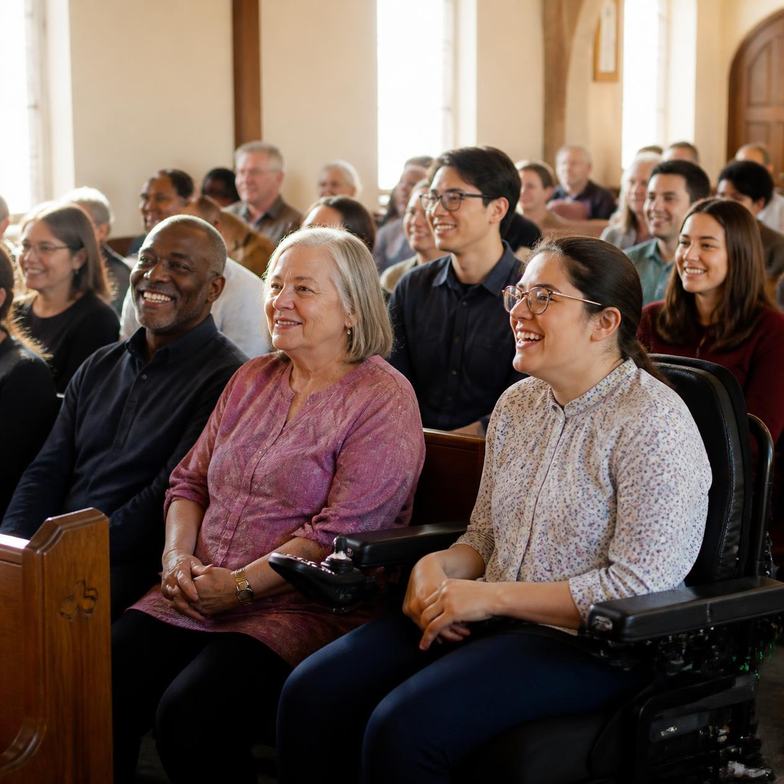
Scripture: Isaiah 56:1-8
Isaiah 56 is one of the most startling passages in the Old Testament because it names, out loud, two groups of people who assumed they had no place in the community of faith: foreigners and eunuchs. Under the law as commonly understood, eunuchs were barred from full participation in worship, and foreigners were, at best, tolerated guests. Isaiah doesn't soften that reality; he confronts it directly, putting the exact worry into their mouths: "The Lord will surely separate me from his people," and "I am just a dry tree." These are not hypothetical fears; they are the words of people who have been told, explicitly or implicitly, that they don't belong.
Then God answers, not with a vague reassurance but with specifics that are almost startling in their concreteness. To the eunuch who keeps the Sabbath and holds fast to the covenant, God promises "a monument and a name better than sons and daughters... an everlasting name that shall not be cut off." To the foreigners who join themselves to the Lord, God promises to bring them to the holy mountain and make them joyful in the house of prayer, because, and this is the line that changes everything, "my house shall be called a house of prayer for all peoples." Not some peoples. All peoples.
This matters today for the same reason it mattered then: most of us carry some version of the eunuch's fear or the foreigner's hesitation. Maybe it's a past mistake, a family that doesn't look like the pictures on the wall, a diagnosis, a divorce, an accent, a doubt we're afraid to say out loud. Isaiah 56 insists that God's house was never meant to be a place for only the "acceptable." It was always meant to be a house of prayer for all peoples, which means the fear that you don't qualify is worth questioning, not obeying.
If God can look at people the culture had written off and promise them not just a seat but a name and a monument, then the question for us is what our churches, workplaces, and neighborhoods actually communicate to people who feel like outsiders. Do we widen the welcome, or do we quietly protect it? Today's passage invites us to notice who around us has decided they're the exception to belonging, and to be the one who tells them otherwise.
Reflection Question
Who in your life has quietly decided "the rules don't include me" — and what would it look like to tell them otherwise this week?
Action Step
Identify one place — a form, a policy, a habit, an unspoken assumption — in your workplace, family, or church where "all peoples" doesn't quite apply yet, and take one concrete step to change it.
Prayer
God of all peoples, thank you for calling the excluded by name and giving them a place better than they imagined. Show us who around us feels like the exception. Give us the courage to widen the welcome instead of guarding it. Amen.